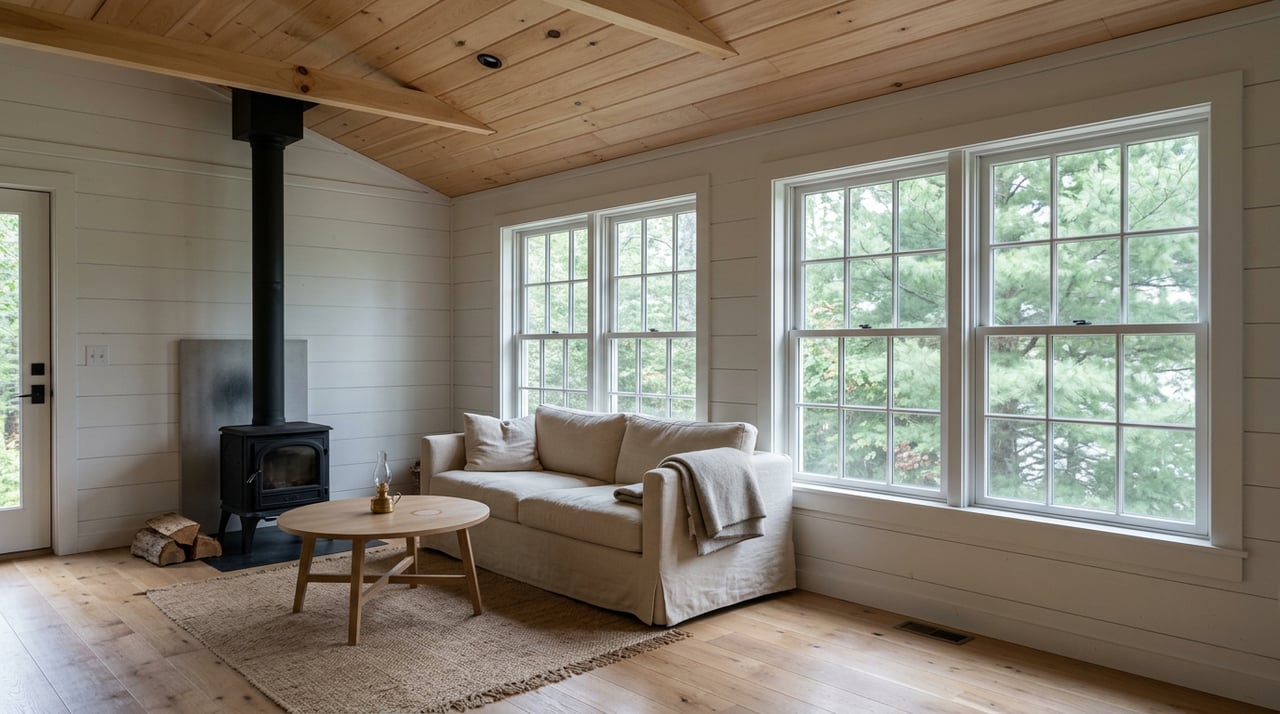
Every buyer who falls for a camp on Maranacook Lake does the same homework first. They look up the 250-foot shoreland setback, confirm the lot isn't in a resource protection district, and feel confident they understand what stands between them and moving in full time. That confidence is usually misplaced. The rule that actually decides whether a seasonal camp on this lake can become someone's real address isn't administered by the code enforcement officer who handles setbacks. It runs through the local plumbing inspector, and it hinges on a single question about wastewater that has nothing to do with property lines.
This matters on Maranacook Lake specifically because the lake still carries a meaningful stock of camps that were never built, plumbed, or permitted to be lived in year-round. The conversion path from summer camp to primary residence is common here, not rare, which means the permit most buyers never research is exactly the one worth understanding before you write an offer.
The Rule Everyone Gets Right
Start with what buyers already know, because it's correct. Maranacook Lake sits inside Maine's mandatory shoreland zone, which under state law extends 250 feet from the normal high-water line of any great pond. Both towns that border the lake, Readfield and Winthrop, enforce their own local ordinances built on that state framework, and both regulate what you can clear, build, or expand within that band. Winthrop amended its shoreland zoning ordinance in December 2024, and the state's Department of Environmental Protection reviewed that update the following year, which tells you the rules here are actively maintained rather than sitting untouched on a shelf.
None of this is the obstacle. Buyers research shoreland setbacks because that's the language real estate listings and town planning pages use most often. It's the visible rule. It is also, for the purpose of turning a summer camp into a year-round home, almost beside the point.
The Permit Nobody Googles
Maine law treats "can I build here" and "can I live here in January" as two separate questions, and the second one has its own permit. Under Title 30-A of Maine statute, before converting a seasonal dwelling located in the shoreland zone into a year-round or principal residence, the owner must obtain a conversion permit from the local plumbing inspector, not the planning board and not the code enforcement office. That distinction alone trips people up, because most buyers assume anything zoning-adjacent runs through the same town office.
Here's how the two tracks actually differ.
| Shoreland Zoning (250-ft rule) | Seasonal-to-Year-Round Conversion Permit | |
|---|---|---|
| Who administers it | Code enforcement officer, per town ordinance | Local plumbing inspector, per state statute |
| What it governs | Setbacks, clearing, structure size and placement | Whether the dwelling can legally become a primary residence |
| Where it's defined | Town shoreland zoning ordinance, built on Maine DEP guidelines | Title 30-A, Section 4215 |
| What stops approval | Nonconforming setbacks, resource protection overlays | Wastewater disposal method serving the structure |
The two processes can run in parallel on the same property, and a camp can be perfectly compliant on setbacks while still failing the conversion permit outright.
The Line That Can't Be Engineered Around
Here's the specific detail that decides most of these conversions. The statute is direct on this point: a seasonal conversion permit cannot be approved if the dwelling's wastewater disposal relies on a holding tank. Not discouraged, not subject to variance. Cannot be approved.
Holding tanks are common on older camps around Maranacook Lake precisely because they were never meant to serve year-round occupancy. A tank that gets pumped a few times each summer works fine for a camp used sixteen weekends a year. Ask that same tank to handle daily use through a Maine winter and the math falls apart, which is exactly why the state drew the line where it did.
This doesn't mean the camp is unconvertible. It means the wastewater system has to change before the plumbing inspector will sign off, typically to a proper septic system with a leach field sized for full-time use. That's a real cost, and it's a cost that shows up late in a transaction if nobody asked the question early. A buyer who assumes the setback check is the whole story can end up mid-mortgage-application before discovering the camp they're financing as a primary residence still runs on a holding tank the town won't permit for that use.
Why This Isn't A Rare Edge Case Here
It would be easy to treat this as a narrow technicality that applies to a handful of unusual properties. Maranacook Lake's own housing mix says otherwise. Roughly one in five homes in the towns that ring this lake are still classified as seasonal rather than year-round, a meaningful share given how many camps here have already been modernized into full-time residences over the past few decades. That ratio tells you the conversion question isn't an edge case you might stumble into. It's a routine part of buying on this lake, which means it deserves routine due diligence, not an afterthought.
For sellers, that same ratio is worth sitting with. If your camp is still classified seasonal, buyers financing it as a primary residence will eventually surface that status, whether through a lender, an insurer, or their own research. Getting ahead of the septic and permit question before listing tends to go better than answering it under offer deadline pressure.
What To Confirm Before You Write The Offer
A few direct questions save weeks of surprise later.
- Ask whether the property is currently permitted as seasonal or year-round, and get that answer from the town, not just the listing.
- Find out what the wastewater disposal system actually is. "Septic" and "holding tank" are not the same answer, and sellers don't always know the difference themselves.
- Ask the local plumbing inspector's office directly whether a conversion permit has ever been issued or denied for that address. This is public information and worth the phone call.
- If the system is a holding tank, get a rough cost estimate for a compliant septic upgrade before you finalize your offer price, not after.
- Confirm winter road access and heating separately from the permit question. Clearing the conversion permit gets you legal status. It doesn't guarantee the driveway gets plowed or the pipes won't freeze.
Many buyers first learn their camp is still legally seasonal when a lender or insurer asks for proof of year-round certification partway through underwriting. Asking the plumbing inspector's office the question yourself, before that point, keeps you in control of the timeline instead of reacting to it.
A Few Questions We Hear Often
Does this apply on both the Readfield and Winthrop sides of the lake? Yes. Both towns enforce their own shoreland zoning ordinance under the same state framework, and the seasonal conversion permit itself comes from state statute, so it applies regardless of which side of the lake the camp sits on. The plumbing inspector's office will differ by town, but the underlying rule doesn't change.
What if I just want to spend more months there without making it my primary residence? The conversion permit specifically governs turning a dwelling into a year-round or principal residence. Using a seasonal camp more often, without establishing it as your primary address, generally doesn't trigger this permit requirement, though local occupancy rules can still apply. This is a case where a direct conversation with the town, not a guess, is worth the phone call.
Can I just upgrade the septic system myself before closing? Only if you're the current owner or have negotiated access as part of the purchase agreement. As a buyer, the more common path is negotiating who bears the cost, seller credit, price adjustment, or a contingency tied to the plumbing inspector's review, before you're locked into a closing date.
If you're weighing a camp on the Maranacook Lake shoreline against other options in the Winthrop Lakes Region, our neighborhood guide to Maranacook Lake covers the parts of the lake buyers ask about most. And if you've found a specific camp and want a straight answer on where it stands with the town before you make an offer, that's exactly the kind of legwork our team does every week. Integrity Homes Real Estate Group is happy to walk through it with you. Book a Free Home Consultation and bring the address.